


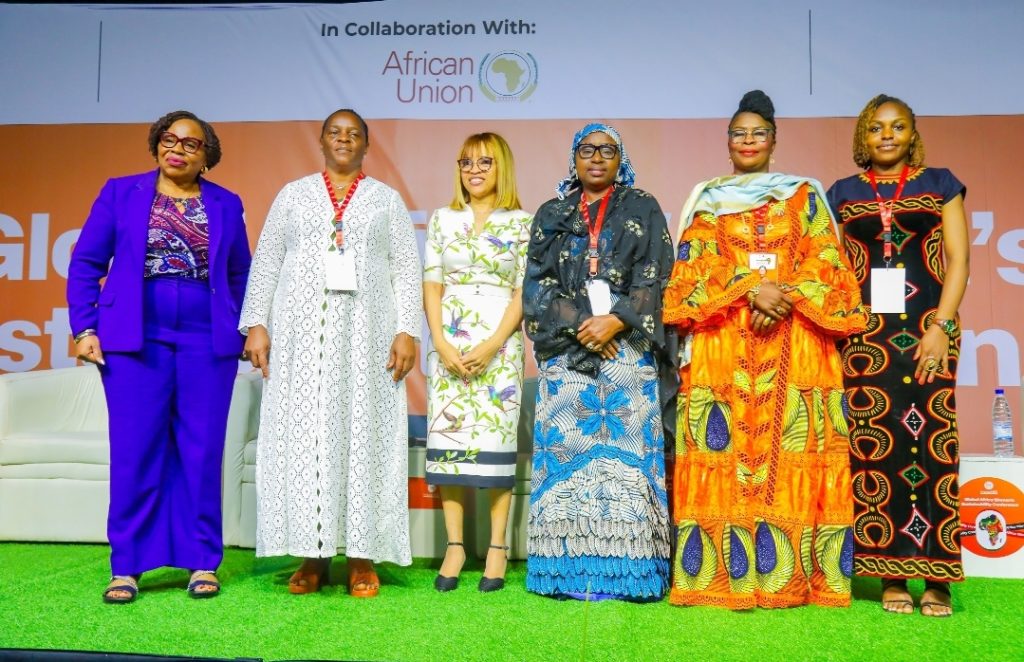
In a bold push to position African women at the forefront of the booming global green economy, ImpactHER Africa, in collaboration with nine African governments, convened over 5,000 female entrepreneurs from 58 countries in Abuja for a landmark sustainability conference.
The event, the second edition of the Global African Women Sustainability Conference, was held under the theme “Rethink, Reinvest, Regenerate: Women Entrepreneurs as Architects of Global Africa’s Sustainable Future.” It brought together an influential mix of stakeholders, including more than 10 African ministers, representatives from 20 African governments, U.S. mayoral delegations, and officials from Latin America and the Caribbean. Major international institutions such as the African Development Bank, the United Nations Conference on Trade and Development, and the African Export-Import Bank also participated.
At the heart of the discussions was a pressing question: how can African women entrepreneurs claim a significant share of the rapidly expanding global green market, currently valued at over $5 trillion annually and projected to reach $7 trillion by 2030?
Efe Ukala, Founder of ImpactHER Africa, emphasized the urgency of integrating African women into this lucrative sector. She noted that the green economy is growing at twice the pace of traditional industries and offers a unique opportunity for women who are already deeply engaged in sustainable practices.
“Across Africa, women are farming regeneratively, building with recycled materials, weaving with eco-friendly dyes, and powering communities with solar energy,” Ukala said. “They are already contributing to sustainability — but from the margins of the global market.”
She pointed to a growing global demand for environmentally responsible products, highlighting that consumers are willing to pay up to 10 percent more for sustainably produced goods. “The premium is real. The market exists,” she added.
Despite this potential, a significant gap persists. Women dominate Africa’s informal cross-border trade sector, accounting for an estimated 70 percent of activity. Yet many remain excluded from formal global trade systems due to structural barriers — chief among them, the lack of certifications and regulatory compliance.
“Our women have the products, but not the paperwork,” Ukala explained. “They have the practice, but not the proof. They are sustainable, but lack the certification that allows the world to recognize it.”
Addressing this challenge was a key focus of the conference. Sessions on “Sustainable Business Foundations” explored pathways for women entrepreneurs to obtain international certifications, meet quality and safety standards, and navigate export requirements — all critical steps toward accessing global markets.
Participating ministers from Nigeria, Chad, Uganda, Zimbabwe, Gambia, Sierra Leone, Côte d’Ivoire, Zambia, and Gabon reaffirmed their commitment to strengthening support systems for women entrepreneurs. They pledged to expand access to financing, streamline regulatory processes, and enhance capacity-building initiatives in their respective countries.
The conference concluded with a unified message: empowering African women entrepreneurs is not just a matter of equity, but a strategic imperative for the continent’s economic transformation and its place in the global green economy.
